
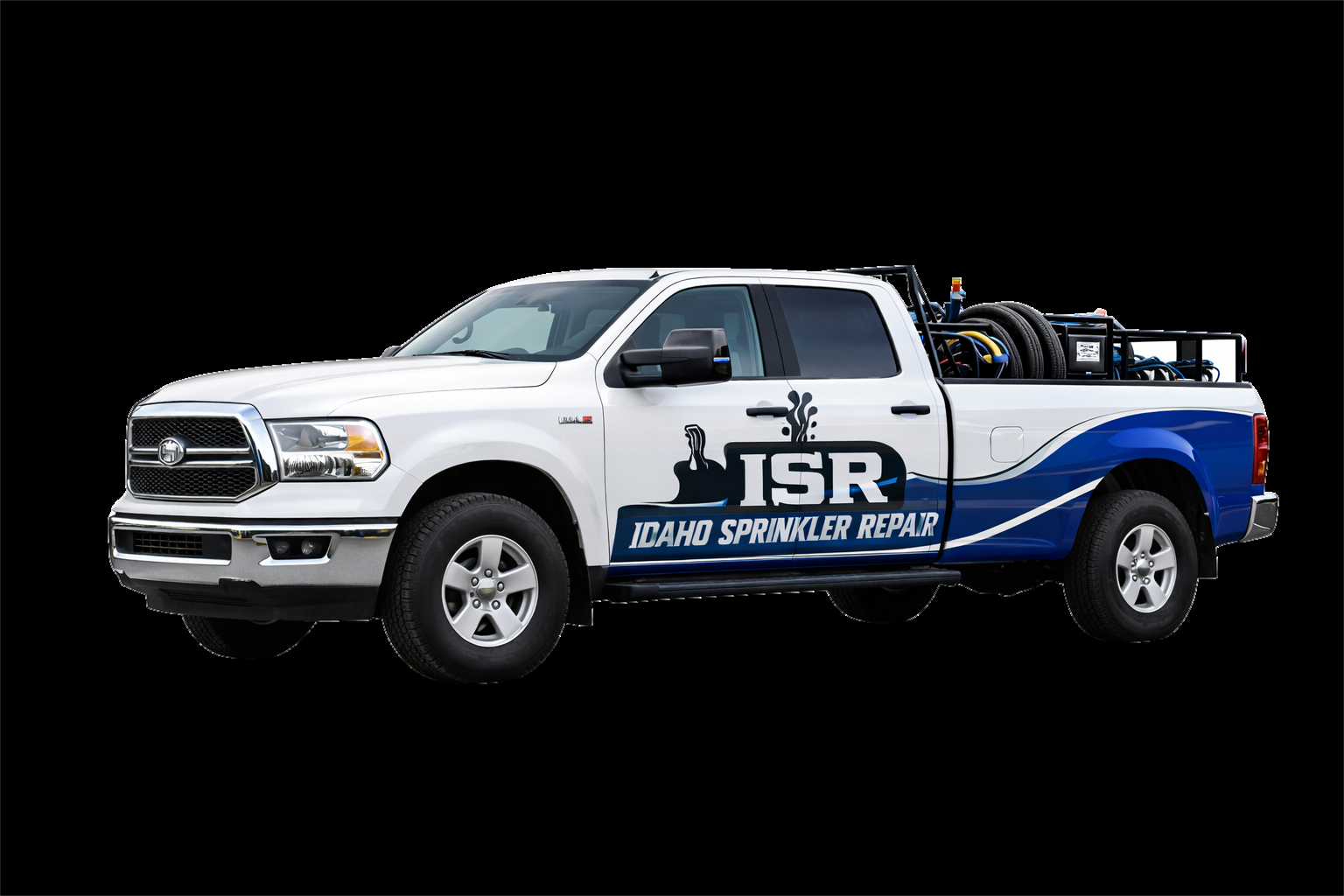
Our Nampa shop sits on West Karcher Road, which puts a truck within fifteen minutes of most of Canyon County. We run repairs, installs, blowouts, backflow testing and drainage work out of this location Monday through Friday until 8 PM and Saturday mornings until 2 PM, which is later and longer than most sprinkler companies in the valley are reachable.
What we see most in Nampa
Nampa systems have three recurring problems and we carry parts for all of them.
The first is hard water. Canyon County water scales up nozzles and filter screens faster than it does on the Boise side, so heads pop up slowly, mist instead of spraying clean, or stop retracting. Replacing a scaled head takes minutes. Leaving it costs you a dry patch every August.
The second is aging pipe in the established neighborhoods. PVC installed through the nineties around Midland, the Garrity corridor and central Nampa is reaching the end of its life, and spring startup pressure is usually what finds the weak joint. If a zone will not hold pressure in April, that is what we are looking for.
The third is coverage in the newer subdivisions. Builder installed systems off McDermott, Karcher, Amity and Greenhurst tend to have overloaded zones, heads aimed at pavement, and corners that never get water. That is a tuning problem more than a repair, and an hour of adjustment usually fixes what people assume needs a whole new system.
Pressurized irrigation
Most of Nampa waters off pressurized irrigation rather than city water, which means your sprinkler season is set by the district calendar, not the weather. We schedule spring startups and fall blowouts around it.
One thing worth knowing: the City of Nampa asks that customers and contractors not operate city side irrigation valves, including valves on private property that tie into the system. We work within that guidance.
Acreage and livestock
A good share of Canyon County is on acreage, and those properties need different work than a quarter acre lot in town. We install Drinking Post frost free automatic waterers for horses, cattle, sheep and goats, run irrigation to pasture and shop buildings, and put in French drains where ground water sits after a wet spring.